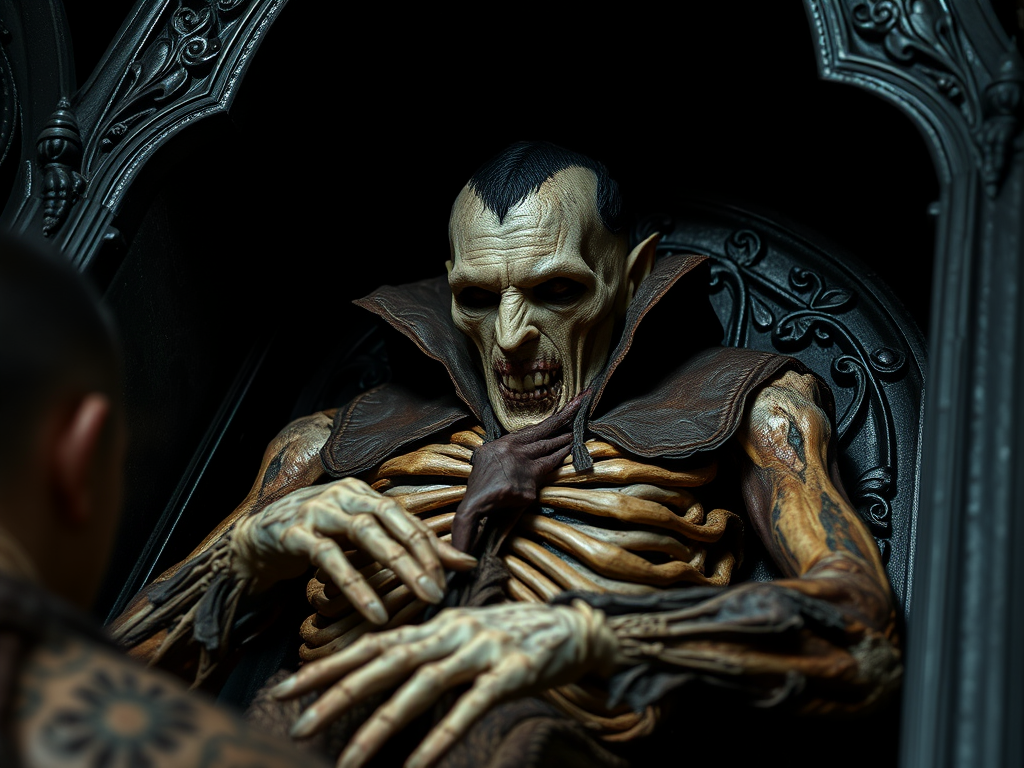
Ash In the Wind

What are your thoughts on the concept of living a very long life? For me, it all depends on the context: are we discussing living for thousands of years like a vampire, or are we discussing downloading a consciousness into an artificial new body, or are we contemplating a normal human life stretched to its limits? It makes a difference; they are all very distinctive states of being.

Firstly, I envision the life of a vampire, living for hundreds or perhaps thousands of years in the darkest corners of the world. Being a vampire, I could travel like the wind, my fear of monsters gone. I’d become popular; cultivating more companions would be as simple as dispensing several affectionate nibbles. Generous victims would provide more than adequate blood and pocket money, and my mood swings would evaporate under the emotionless state of vampire etiquette. Eventually, though, due to the carnage I leave behind, vampire hunters would pursue me. I envision myself chased into hiding, whereupon the heroic hunters ferret out my lair and expose me to full sun. I evaporate; ash in the wind. Not a damn good deed done in my name. No, the vampire life is not for me.

So, the second option of a very long life might be to transfer my consciousness into a lab-grown body or robotic host. Death would become extinct. Granted, it might be exciting for the first few hundred years to do everything I ever wanted to do because I had no time restrictions, but on the other hand, wouldn’t it all become mundane after a few hundred years? Much of our drive and dedication comes from knowing we have a limited amount of time on this glorious planet. And what about people’s ability to have children? Do you think once the planet is infested with billions of artificial immortals that children would even be allowed? Unlikely. Suddenly, this is not my idea of a utopia, this sounds more like a perversion of humanity.

Lastly, I consider the length of a natural human life. As children, it seems long; as adults, it seems short. Our lives are limited by time. We often set a rapid pace, trying to fit in as many things as we can into our day. The older we are, the more precious and valuable our moments become. Many elderly find themselves unwell in heart, body, or mind, yet others find themselves getting along just fine. Aging is an individual process. My husband’s grandma turned one hundred years old last February, and she went skydiving to celebrate. She is doing it again this year. My aunt, who is elderly, swims most mornings, plays bridge twice a week, reads a couple of books a week, sews lap quilts for a charity, has the best sense of humor, and can still weed a garlic patch with the best of them. So, what are my thoughts on the concept of living a very long life? It depends on the individual’s desire. Who am I to say anything else.

Daily writing prompt
What are your thoughts on the concept of living a very long life?

Offering You a Smile

A smile is a gift. It is a welcoming recognition of another person’s spirit and serves to connect with others in a meaningful way. On, April 12, 2019, a team of psychologists from the University of Tennessee found that smiling can make people feel happier. They combined data from 138 studies testing more than 11,000 participants and found that facial expressions have an impact on our feelings. This rings true for me. I certainly feel happier and more synergistically inclined when anyone, be it a stranger, or a friend, flashes me an honest smile.

Smiles are impossible to find these days, in the streets or in the stores, and while we may feel a temporary jump of joy at buying such things as; soap in the shape of a big toe, or a pair of it’s okay to fart socks, or a Maserati sports car, eventually the glee of owning something new fades away leaving only emptiness in your heart. Truthfully, the only substance in our lives is created by maintaining and forming new connections with other human beings. Joy is better times two. We are without a doubt happier, healthier and stronger with regular human interaction.

Harvard Health Publishing, printed an article; The Health Benefits of Strong Relationships, declaring that, ‘Good connections and social support can improve health and increase longevity.‘ And it went on to state: ‘For many of us, the holidays mean family gatherings, getting together with friends, and participating in special religious, community, and workplace activities. Such occasions are an opportunity to check in with each other, exchange ideas, and perhaps lend some social support to each other.

Social connections like these not only give us pleasure, they also influence our long-term health in ways every bit as powerful as adequate sleep, a good diet, and not smoking. Dozens of studies have shown that people who have social support from family, friends, and their community are happier, have fewer health problems, and live longer.

Conversely, a relative lack of social ties is associated with depression and later-life cognitive decline, as well as with increased mortality. One study, which examined data from more than 309,000 people, found that lack of strong relationships increased the risk of premature death from all causes by 50% — an effect on mortality risk roughly comparable to smoking up to 15 cigarettes a day, and greater than obesity and physical inactivity.’

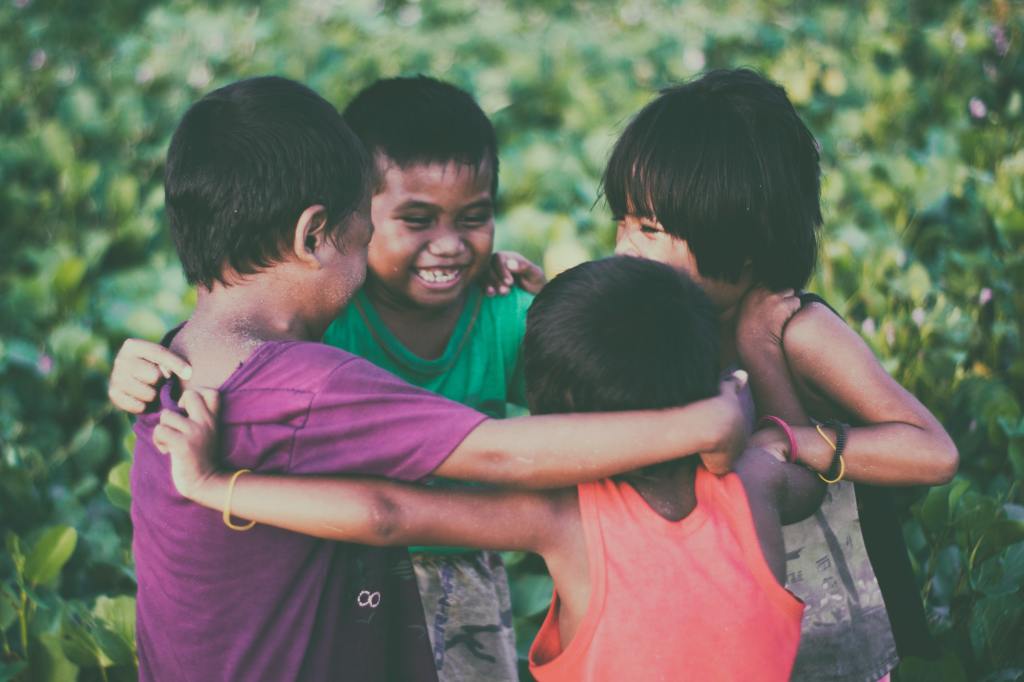
We all know at our very core just how important human touch is for our health and welfare. It is the weakest among us who need people around them the most. The miraculous healing benefits of a loving touch has been seen time and time again in hospitals and care centres, and was clearly demonstrated in the CNN story on YouTube called, The hug that helped change medicine. Doesn’t everyone deserve a hug from someone who loves them? It is time to reevaluate the data on asymptomatic spread. There is more and more information coming out which proves people without symptoms pose no threat. We must use our good sense instead of our fears. There is always a tipping point when good intentions fail. Have we gone over?

“Sometimes I feel so— I don’t know—lonely. The kind of helpless feeling when everything you’re used to has been ripped away. Like there’s no more gravity, and I’m left to drift in outer space with no idea where I’m going.”

-Haruki Murakami